Choosing a Circle Skirt manufacturer in China involves more than comparing unit prices. Buyers need dependable pattern development, consistent stitching, fabric traceability, and clear communication about minimum order quantities. The market context matters, too. McKinsey and The Business of Fashion’s State of Fashion 2025 report projected global fashion growth of 2% to 4% in 2025, signaling a cautious environment for brands planning new collections. Every production decision counts.
Materials deserve close attention. Textile Exchange’s Materials Market Report 2024 estimates that global fiber production reached 124 million tonnes in 2023, up from 116 million tonnes in 2022. The report also projects production could reach 160 million tonnes by 2030. These figures do not describe circle skirts specifically, but they underline why buyers should ask manufacturers about fiber content, fabric sourcing, and documented material claims. A swatch can look convincing under showroom lights. It may behave differently after washing.
This guide introduces Chinese manufacturers serving international buyers and highlights practical points for comparing their capabilities. Look for evidence of sample quality, grading accuracy, production capacity, and quality-control procedures—not just polished product photos. Ask how factories handle waistbands, hems, fabric drape, and size tolerances. Small details matter. No supplier profile can replace a sample review or a direct conversation, and even a careful checklist may miss issues that appear only in bulk production. That is worth remembering before placing an order.
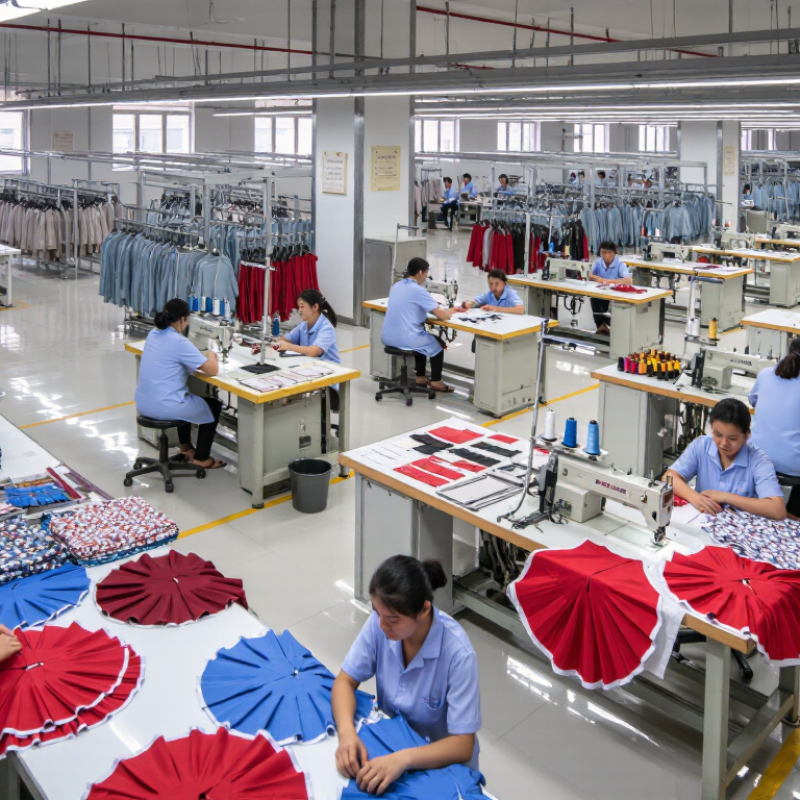
Circle skirt manufacturing in China combines pattern engineering, fabric selection, cutting, and careful sewing. The defining detail is the circular pattern, which creates a fluid hem but can use more fabric than a straight skirt. Factories usually check the fabric’s drape and stretch before confirming the pattern. Small differences matter. A lightweight woven cloth may need different handling from a stable cotton blend.
During sampling, buyers should review waist measurements, skirt length, seam finishes, and hem balance. The bias sections can drop after hanging, so some makers let a sample rest before hemming it. Ask how measurements are checked and whether production follows the approved sample. Clear specifications help. Include tolerances, fabric composition, lining requirements, and packing details in the order documents. Photos are useful, but they cannot show fabric weight or hand feel.
Production capability varies between workshops, even within the same region. A factory may manage cutting efficiently yet need extra guidance on grading a design across sizes. Request a sample and inspect its seams, waistband, and movement while walking. One limitation is easy to miss: a skirt that looks even on a table may hang unevenly on the body. For global buyers, realistic lead times and written quality checkpoints make discussions more dependable than promises alone.

China’s circle skirt supply chain is spread across several apparel and textile clusters. Guangdong, especially around Guangzhou and Dongguan, offers access to garment workshops, trim suppliers, and export logistics. Buyers can often discuss pattern development, sampling, sewing, and packing within one regional network. Zhejiang is known for its broad fabric and textile ecosystem, useful when comparing cotton, poplin, or lightweight blends. Jiangsu also has established garment production, though capabilities differ between factories.
Details matter. A circle skirt’s drape depends on fabric weight, grain direction, and finishing, not just the pattern. Ask suppliers how they control hem stretch and whether samples are hung before hemming. For example, a lightweight skirt may need time to settle after cutting. A supplier that explains this process clearly is easier to assess than one offering only a low unit price.
Many manufacturers can support custom sizing, labels, and small sample runs, but production limits vary. Request a size-set sample, fabric composition details, and measurements taken after washing when relevant. Check how the waistband is reinforced and whether the supplier can maintain consistent fullness across sizes. A polished sample is useful, but it does not prove bulk consistency. I would still verify inspection records and confirm the fabric lot before approving production; that step can feel slow, yet it prevents avoidable surprises.
Chinese circle skirt manufacturers often differ more in production model than in headline capacity. An export-oriented cut-and-sew factory may handle pattern development, fabric sourcing, grading, and bulk sewing under one roof. Its sample room can test how a skirt hangs in lightweight cotton, satin, or pleated fabric. Ask for a physical sample before approving a large order. Photos can hide uneven hems.
A second profile is the smaller, flexible workshop. It may suit limited runs, custom waistbands, or several length options, with closer communication during sampling. However, production planning can be less predictable when orders grow quickly. Confirm monthly capacity, sample timing, and how fabric shade differences are checked. Get those details in writing.
Some larger manufacturers focus on repeatable basics and structured quality checks. Useful signs include documented measurement points, in-line inspections, and final checks for seam strength and hem consistency. Request a size-set sample and a clear measurement chart; compare the waist, hip, and skirt length yourself. Ask how defects are recorded, not just whether inspection happens. I would not assume the biggest factory is the safest choice. A smaller supplier may communicate better, while still needing closer production follow-up. Those trade-offs deserve honest discussion.
When comparing circle-skirt manufacturers in China, look beyond the quoted price. Ask each supplier for the same fabric weight, waist measurements, skirt length, and hem width. This makes quotations easier to compare. Check whether the price includes samples, labels, packaging, and shipping terms. A low unit price can hide extra costs.
Request a pre-production sample in the intended fabric. Hang it for a day, then inspect how the panels fall and whether the hem sits evenly. Check the waistband, zipper, and seam finishes by hand. Ask for fabric composition and test results for shrinkage and colorfastness. Small details matter. A neat sample is useful, but it cannot prove every production piece will match. Confirm measurement tolerances and agree on how finished goods will be inspected.
Tips: Send a clear measurement chart and reference photos. Keep a dated sample for comparison. Ask who performs inspections and request dated photos or a report from a production run. Compare response times, too. A quick reply is helpful, but written answers should be specific. No checklist catches everything; allow time to review corrections before bulk production.
China remains a major apparel-export base: the WTO’s World Trade Statistical Review 2023 records about US$182 billion in Chinese clothing exports in 2022. That scale alone does not guarantee a suitable circle-skirt supplier. Ask for the factory address, production steps, capacity, and export experience. Share a technical pack with waist measurements, skirt length, waistband construction, lining, and size grading. Test the drape. Circle skirts can hang unevenly when fabric weight or grain direction changes. Request a pre-production sample, then check the hem on a form and after washing. Even a neat sample can conceal uneven bulk stitching.
Agree on fabric width, color tolerances, minimum order quantity, sample charges, and lead times before paying a deposit. Ask how the supplier controls fabric shrinkage and checks finished measurements. Build in slack. UNCTAD’s Review of Maritime Transport 2024 notes that over 80% of world merchandise trade by volume moves by sea, so port delays can affect delivery dates. Confirm shipping terms, carton details, packing lists, and origin documents with the supplier and freight forwarder. Verify import and labeling requirements in your destination market. Keep inspection criteria in writing; vague terms like “good quality” invite avoidable disputes.
| Evaluation Dimension | Typical Supplier Capability or Benchmark | What Buyers Should Verify |
|---|---|---|
| Product specialization | Apparel factories may produce full-circle, half-circle, or gathered skirts, alongside other woven or knit garments. | Ask for relevant skirt samples and confirm the factory has experience with the intended fabric weight, silhouette, and construction. |
| Fabric options | Common options include cotton, polyester, viscose, linen blends, denim, and stretch fabrics. Availability depends on the mill and fabric specification. | Confirm fiber content, fabric weight, width, colorfastness, shrinkage, and whether the fabric is sourced domestically or imported. |
| Customization | Custom details can include waistband construction, closures, pockets, lining, hem finish, prints, labels, and packaging. | Provide a tech pack or reference sample, and approve a pre-production sample before bulk cutting. |
| Minimum order quantity | Minimums vary by factory, fabric, color, and trim. Custom-dyed or printed fabrics often require higher commitments than stock fabrics. | Request separate minimums per style, color, and size range, and clarify whether sampling or setup charges apply. |
| Sampling and fit approval | Factories commonly offer prototype and fit samples; the number of revisions and sample charges vary by supplier. | Agree on measurement tolerances, grading rules, sample timelines, and who pays for courier costs before development begins. |
| Production lead time | Bulk timing depends on order size, fabric readiness, approvals, and factory capacity; lead times should be confirmed for each order. | Ask for a written production schedule covering material sourcing, cutting, sewing, inspection, and packing. |
| Quality control | Inspection may cover measurements, stitching, seam strength, appearance, labeling, and packing. Inspection scope varies by agreement. | Set acceptable quality criteria in writing and specify whether checks occur during production, before shipment, or both. |
| Compliance and documentation | Export documentation and product compliance requirements depend on the destination market, product materials, and transaction terms. | Confirm applicable labeling, fiber-content, chemical, and safety requirements with the supplier and relevant market specialists. |
| Export and shipping | Suppliers may support export packing and shipment coordination; available shipping arrangements vary by supplier and destination. | Agree on the Incoterms® rule, named place, carton details, shipping documents, and responsibility for duties and freight. |
| Supplier due diligence | Capabilities and export experience should be assessed individually rather than inferred from a supplier’s location or product listing. | Verify the legal entity, production address, references, relevant audit records, and consistency between samples and production capability. |
Note: The benchmarks above describe general sourcing considerations, not rankings or verified claims about specific manufacturers. Minimums, lead times, services, and compliance capabilities must be confirmed directly with each supplier.