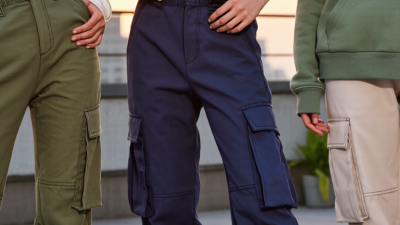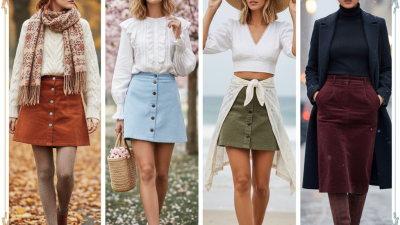
The 2026 global market for Baggy Cargo Pants Women is moving beyond simple utility. Shoppers now expect comfort, adaptable styling, and dependable construction. They also want pockets that work, not decorative flaps that add bulk. This guide examines leading silhouettes for different climates, body shapes, and daily routines.
Fashion stylist and consultant Shiona Turini has said, “The best clothes give you freedom to move and express yourself.” That principle fits cargo trousers especially well. A strong pair should allow easy walking, sitting, and layering without losing its shape. Look for breathable cotton blends in warm regions. Choose brushed twill or recycled nylon for cooler, wetter conditions. Reinforced stitching matters around pocket corners and waistband seams. Zippers should glide smoothly. Snaps should close without forcing the fabric.
Fit remains complicated. Very wide legs can overwhelm a shorter frame. A higher rise may feel secure, yet it can become uncomfortable after long hours. Adjustable hems help, but they are not always elegant. Small details matter.
This guide compares volume, fabric weight, pocket placement, color, and size availability. It also considers wholesale consistency, care instructions, and return policies across major markets. Price alone cannot prove quality. A low-cost pair may fade after several washes. An expensive pair may still have weak hardware.
There is no perfect universal style. Bodies, climates, and preferences differ. Still, careful buying can reduce mistakes. The best Baggy Cargo Pants Women balance practical storage, relaxed movement, and a polished everyday appearance.
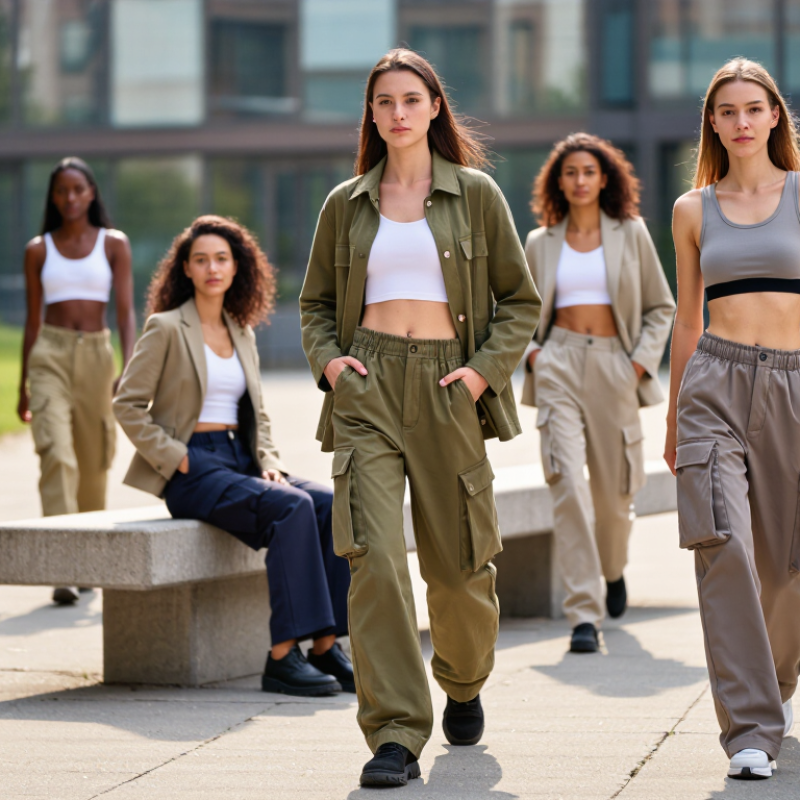
The 2026 market for women’s cargo pants is becoming more diverse, according to outlooks from Statista and Euromonitor. Their data helps frame demand across regions, price levels, and apparel categories. It also shows why global buyers should avoid treating one market as universal.
Regional preferences remain important. In North America, relaxed silhouettes and multiple pockets suit casual, travel, and outdoor wardrobes. European shoppers often inspect fabric weight, tailoring, and environmental claims more closely. In parts of Asia, lighter materials and adjustable waists may perform better in warmer cities. These patterns are useful, but forecasts can miss sudden changes in weather, income, or social media behavior.
For a 2026 buying review, examine cotton blends, recycled fibers, pocket construction, and seam strength. A pair may look practical, yet poorly placed pockets can distort the shape when filled. Check size measurements carefully. Cargo pants with wide legs may require shorter inseams for petite customers, while tall buyers may need longer rises. Color demand also deserves attention: black, olive, beige, and stone remain commercially flexible, but seasonal shades can create faster visual interest.
Data needs judgment. Statista can support market sizing, while Euromonitor adds category and consumer context. Neither source replaces local testing. I would compare online search trends, return reasons, and small-batch sales before committing deeply. That approach is slower. It is also less likely to confuse global attention with dependable demand.
For 2026, women’s baggy cargo trousers are moving beyond oversized utility.
WGSN’s consumer-led insights point toward comfort, adaptable fit, and practical detail. Shoppers want room through the thigh without losing shape at the waist. They also expect pockets to hold a phone, cardholder, and small daily items.
Different consumers need different proportions. Younger shoppers often choose low-slung, wide-leg silhouettes with adjustable hems. Commuters tend to prefer a mid-rise waist, lighter fabric, and flatter pockets.
Curvier customers may need a contoured waistband and extra hip ease. Petite shoppers usually benefit from a shorter inseam and reduced pocket scale. These details affect real comfort, not just appearance.
Fit testing should include sitting, walking, and carrying weight. Try trousers with a thin top, then with a knit layer. The waistband should stay secure without digging into the stomach.
Excess fabric can look stylish, but it may overwhelm a shorter frame. No trend forecast is perfect. Local climate, body diversity, and return data still matter.
For global buying, choose breathable cotton blends for warm regions and softer, heavier twills for cooler markets. A flexible hem, reinforced seams, and adjustable waist tabs can extend usability. Yet too many features may create visual clutter. That balance remains easy to miss.
For 2026 women’s baggy cargo pants, fiber choice matters as much as pocket design. Textile Exchange’s Materials Market Report 2024 estimates global fiber production reached 124 million tonnes in 2023. Polyester represented about 59% of output, while cotton contributed roughly 19%. This scale shows why material benchmarking cannot rely on appearance alone.
For cargo silhouettes, dense cotton twill offers structure and familiar comfort. Recycled polyester can improve drying speed and abrasion resistance. Yet Textile Exchange reports recycled polyester at only about 12% of polyester production. Most polyester still comes from virgin fossil resources. A recycled label is not automatically a low-impact product. Certification scope, feedstock, and traceability deserve careful checking. The report also expects total fiber production to approach 160 million tonnes by 2030, which makes volume reduction important, not optional.
Tips: Ask suppliers for fiber percentages, recycled-content certificates, and fabric test results. Check seam strength, colorfastness, and shrinkage after washing. A practical pair should survive repeated wear, not only look oversized in a studio. Choose adjustable hems and reinforced pocket openings where possible. Cotton may feel more natural, but farming conditions vary widely. Polyester may last longer, but shedding remains a concern. This benchmark is useful, though incomplete; water use, dye chemistry, worker conditions, and end-of-life options still need review.
Global fiber production by fiber category in 2023, based on Textile Exchange’s 2024 Global Fiber Data. The benchmark helps compare material choices for durable, relaxed-fit cargo pants.
Polyester represented the largest share of global fiber production at 59%, followed by cotton at 19%. The estimated volumes use total global fiber production of approximately 124 million tonnes in 2023; percentages are rounded.
2026 Top Baggy Cargo Pants for Women Global Buying Guide
Supplier and Trade Analysis Using UN Comtrade Women’s Trousers Statistics
Baggy cargo trousers are moving from utility wear toward flexible everyday clothing. For sourcing teams, style interest is not enough. HS 620462 covers women’s cotton trousers, while HS 620463 covers synthetic-fiber trousers in UN Comtrade. These codes help separate genuine trade demand from social-media noise. The data is imperfect.
UN Comtrade trade records consistently place China, Bangladesh, Vietnam, Türkiye, and Pakistan among important apparel supply sources. Rankings change by product code, reporting country, and shipment year. Cotton cargo styles usually require stronger fabric inspection, especially around pocket seams and waistband recovery. Synthetic blends may reduce cost, but buyers should check breathability and fiber declarations before placing large orders.
The International Trade Centre’s Trade Map supports a similar approach. Compare export value, quantity, and unit value together. A low unit value can signal efficiency, but it may also reflect thinner fabric or simpler finishing. McKinsey’s State of Fashion reporting continues to identify cautious consumer spending and supply-chain resilience as major industry pressures. That matters in 2026. Smaller trial orders may protect cash flow, although they can increase per-unit freight costs. I would also question any supplier ranking based on one year alone. Exchange rates, inventory clearance, and delayed customs reporting can distort the picture. Reliable buying decisions need at least three years of UN Comtrade comparisons, factory documentation, and physical sample testing.
| Market / Trade Dimension | HS 2022 Product Code | Product Scope | 2023 Reported Import Value (USD million, rounded) |
Typical Supply Region | Baggy Cargo Buying Signal | Recommended Commercial Check |
|---|---|---|---|---|---|---|
| United States | 620462 / 620463 / 620469 | Women’s trousers and breeches of cotton, synthetic fibres, and other textile materials | 3,240 | South and Southeast Asia; Central America | Large-volume market; strong demand for utility pockets, relaxed fits, and cotton-blend fabrics | Confirm CPSIA compliance, fiber labeling, pocket-bar-tack strength, and carton testing |
| Germany | 620462 / 620463 | Cotton and synthetic-fibre women’s trousers | 1,180 | South and Southeast Asia; Eastern Europe | Preference for durable construction, restrained colours, and measurable sustainability documentation | Request REACH documentation, colourfastness testing, and recycled-fibre evidence where claimed |
| France | 620462 / 620463 / 620469 | Women’s trousers and breeches across principal textile fibres | 930 | North Africa; South and Southeast Asia | Fashion-led demand for wide-leg silhouettes, adjustable hems, and tonal utility details | Approve a pre-production fit sample and verify French/EU care-label requirements |
| Spain | 620462 / 620463 | Cotton and synthetic-fibre women’s trousers | 790 | North Africa; South Asia; Turkey | Good fit for seasonal fashion programs and medium-weight twill cargo styles | Compare landed cost by origin and test seam slippage on multi-pocket panels |
| United Kingdom | 620462 / 620463 / 620469 | Women’s trousers and breeches of cotton, synthetic fibres, and other materials | 720 | South Asia; Southeast Asia; Türkiye | Demand for relaxed streetwear proportions, washed finishes, and functional styling | Check UKCA-related product obligations where applicable and validate import documentation |
| Japan | 620462 / 620463 | Cotton and synthetic-fibre women’s trousers | 620 | China; Southeast Asia; South Asia | High sensitivity to pattern balance, neat finishing, lightweight fabrics, and accurate sizing | Use detailed measurement charts and inspect zipper, snap, and drawcord performance |
| Italy | 620462 / 620463 / 620469 | Women’s trousers and breeches across principal textile fibres | 540 | Mediterranean region; South and Southeast Asia | Premium-leaning demand for fabric hand feel, clean topstitching, and refined cargo details | Evaluate fabric GSM, shrinkage, finishing consistency, and small-batch flexibility |
| Netherlands | 620462 / 620463 | Cotton and synthetic-fibre women’s trousers | 510 | South Asia; Southeast Asia; intra-European trade | Important distribution gateway with emphasis on logistics efficiency and traceability | Model duty, freight, port handling, and re-export effects separately from factory price |
| Global HS 620462 | 620462 | Women’s or girls’ trousers and breeches of cotton | 6,820 | South Asia; Southeast Asia; East Asia | Core category for cotton twill, canvas, denim, and garment-dyed cargo pants | Check fabric composition, GSM, shrinkage, colourfastness, and restricted substances |
| Global HS 620463 | 620463 | Women’s or girls’ trousers and breeches of synthetic fibres | 5,740 | Southeast Asia; East Asia; South Asia | Suitable for lightweight, quick-drying, stretch, and technical utility constructions | Verify recycled-content claims, pilling resistance, dimensional stability, and seam durability |
| Global HS 620469 | 620469 | Women’s or girls’ trousers and breeches of other textile materials | 1,260 | Asia; Europe; North Africa | Niche opportunity for linen, ramie, blended, and alternative-fibre cargo designs | Confirm exact fibre classification before customs filing and test shrinkage after laundering |
For 2026, buying women’s baggy cargo pants requires more than checking the wholesale price. Textile Exchange’s Materials Market Report 2024 recorded 124 million tonnes of global fiber production in 2023. Material choice now affects cost, sourcing risk, and customer trust. Request fabric composition, weight, shrinkage results, and recycled-content evidence. A practical landed-cost sheet should include fabric, sewing, trims, packaging, freight, duties, testing, and inspection. Low prices can hide weak zippers or unstable dyeing.
Size accuracy needs measurable control. Ask the factory to follow ISO 8559-1 body-measurement principles and provide a graded size chart. Check waist, hip, inseam, rise, thigh, and pocket placement. For loose silhouettes, measure the garment flat and on a fit model. Allow documented tolerances, such as ±1 cm for key points, if the factory can maintain them. Fit samples often reveal problems. I still find size labels less reliable than actual measurements.
Tips: Set MOQ by color and size, not only by total units. Request a pre-production sample, fabric test, colorfastness report, and needle-damage inspection. Confirm care labels and chemical restrictions for each sales market. ISO 3758 supports care-labeling consistency, while regional rules may differ. Track defect rates, measurement pass rates, seam strength, zipper cycles, and shrinkage after washing. A 2% defect rate may sound acceptable, but it becomes expensive across 10,000 units. Calculate the real cost.