What is T Shirt Manufacturing and How Does it Work?
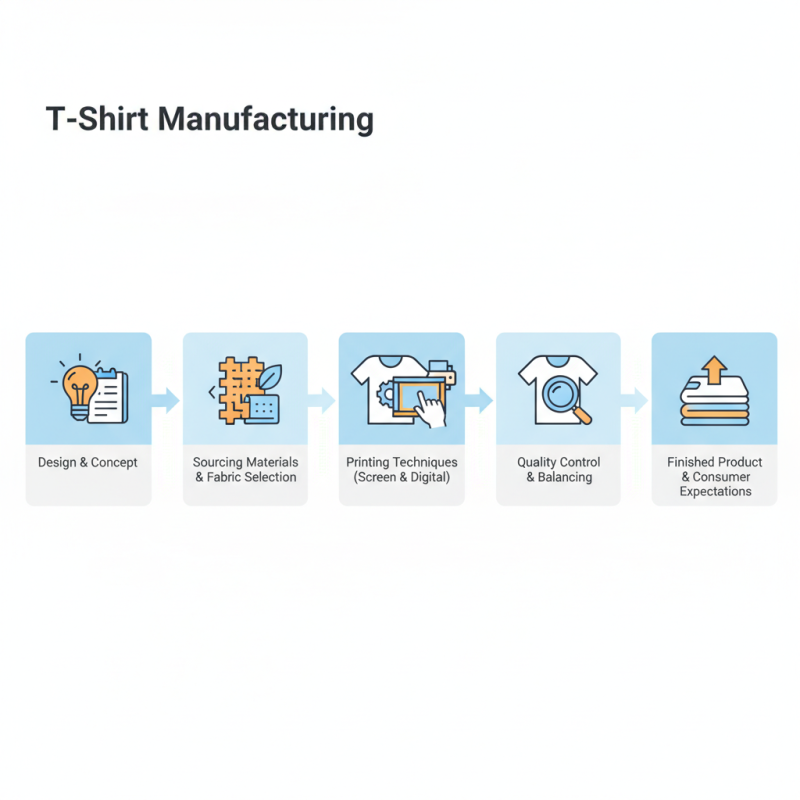
T Shirt Manufacturing has evolved into an intricate process, reflecting advances in technology and design. As noted by industry expert John Smith, "The journey from concept to finished product is both exciting and challenging." This journey involves multiple stages, including design, sourcing materials, and printing techniques.
Many people overlook the complexity behind T Shirt Manufacturing. It starts with creative ideas, often leading to various prototypes. Each prototype may require adjustments, indicating that perfection is a constant pursuit. Choosing the right fabric is crucial. This choice affects durability, comfort, and overall appeal.
Then comes the printing phase, which includes screen printing and digital methods. Each method has its pros and cons. Digital printing offers precision but may lack the vibrancy of traditional techniques. This inconsistency raises questions about quality control. In this competitive landscape, manufacturers must find balance to meet consumer expectations.
Overview of T-Shirt Manufacturing Process
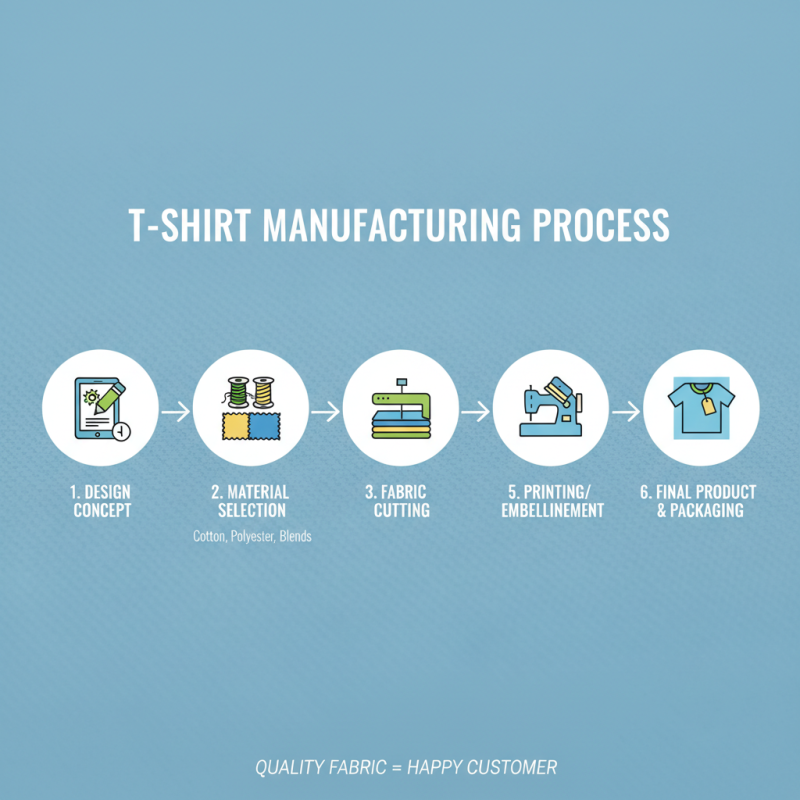
The T-shirt manufacturing process is both fascinating and complex. It involves several steps, starting from design to the final product. Designers often sketch ideas or digital mockups. Once the design is approved, materials need to be selected. Cotton and polyester are popular choices. The type of fabric can affect the final look and feel. A poor choice can lead to disappointment.
After materials are chosen, the cutting stage begins. Large fabric rolls are laid out and cut into pieces. Precision is key here; one mistake can ruin multiple shirts. Next, the pieces are sewn together. This requires skilled labor to ensure quality stitching. Some manufacturers use machines for efficiency. However, this can lead to less attention to detail.
Printing designs on T-shirts is another crucial step. There are various techniques, such as screen printing or direct-to-garment printing. Each method has its own strengths and weaknesses. Quality control is essential throughout. Inspecting each shirt for flaws can be tedious. Flaws can occur at any stage. It’s a continuous learning process to improve production standards.
Materials Used in T-Shirt Production
T-shirt manufacturing relies heavily on materials. The most common fabric is cotton, which accounts for about 56% of the global market. Cotton is favored for its softness and breathability. Organic cotton is gaining traction, appealing to environmentally conscious consumers. However, the supply chain can be complex, often raising sustainability concerns.
Polyester is another popular choice. It comprises roughly 30% of T-shirt production. This synthetic fiber is durable and wrinkle-resistant, yet it has a significant environmental impact due to microplastic shedding. Innovations aim to improve recycling processes, but many challenges remain. Blends of cotton and polyester are widely used too, creating garments that combine comfort and functionality.
Other materials, like bamboo and hemp, are emerging options. Bamboo is eco-friendly but can be costly to process. Hemp offers durability and a smaller ecological footprint yet faces a stigma related to its association with cannabis. The T-shirt industry must address these material challenges to ensure a sustainable future. The market demands more environmentally friendly options, yet cost and consumer habits often hinder progress.
Step-by-Step Construction of a T-Shirt
The process of T-shirt manufacturing begins with selecting fabric. Cotton is a popular choice. It’s soft and breathable. However, blends can offer better durability. After choosing fabric, patterns are created. These patterns determine the T-shirt’s shape and size.
Cutting comes next. Fabric pieces are carefully laid out and cut with precision. This step requires attention to detail. Sometimes, miscalculations happen, leading to waste. Once cut, the pieces are sewn together. Here, machines play a crucial role. Still, skilled hands are necessary to ensure quality.
After assembly, the T-shirts are checked for flaws. Not every piece passes the inspection. Some may have uneven seams or misaligned prints. Quality control is essential but can be overlooked in a rush. Finally, T-shirts are packaged and prepared for distribution. Yet, the journey doesn’t always end there; feedback from customers often leads to further improvements.
What is T Shirt Manufacturing and How Does it Work? - Step-by-Step Construction of a T-Shirt
| Step |
Description |
Materials Used |
Tools Needed |
| 1 |
Design Creation |
Digital Files (AI, PSD) |
Computer, Design Software |
| 2 |
Fabric Selection |
Cotton, Polyester, Blends |
Swatches, Samples |
| 3 |
Pattern Making |
Paper Patterns |
Scissors, Rulers, Markers |
| 4 |
Fabric Cutting |
Selected Fabric |
Cutter, Cutting Table |
| 5 |
Sewing |
Thread |
Sewing Machine, Needles |
| 6 |
Printing/Embroidery |
Inks, Embroidery Threads |
Printing Machine, Embroidery Machine |
| 7 |
Quality Control |
N/A |
Checklists, Measuring Tools |
| 8 |
Packing |
Packaging Materials |
Packing Table, Tape |
| 9 |
Distribution |
N/A |
Transportation Vehicles |
Printing Techniques for T-Shirt Designs
When it comes to T-shirt manufacturing, printing techniques play a crucial role. Each method offers unique advantages and challenges.
Screen printing is one of the most popular techniques. It allows for vibrant colors and durable designs.
However, it requires a setup for each color used. This can lead to high initial costs and longer production times.
Direct-to-garment (DTG) printing has gained traction recently. It produces high-quality images directly onto the fabric.
This method is great for complex designs. Yet, it may not be as cost-effective for large runs. The ink may also fade faster than screen printing.
Heat transfer printing is another method worth mentioning. It transfers a design from a special paper onto the shirt using heat.
This technique is easy to learn, but it can result in a less breathable finish. Moreover, the quality varies based on the equipment used.
This highlights the need for careful choice of method based on the intended design and production scale.
Each technique has strengths and weaknesses. Understanding these can help in making informed decisions for any T-shirt manufacturing project.
Quality Control and Final Product Assessment
Quality control in T-shirt manufacturing is crucial.
It ensures that each product meets specific standards. According to industry reports, over 70% of consumers expect high-quality materials and stitching. However, achieving this consistency can be challenging.
Final product assessment involves multiple stages. Manufacturers often perform visual inspections to check for defects. They also measure fabric durability and color fastness. Notably, about 10% of T-shirts fail quality tests due to poor stitching or fading colors. This raises concerns about supplier reliability and material sourcing.
Despite rigorous processes, mistakes still occur. Sometimes, batches can be mislabeled or sizes can be inconsistent. This not only affects customer satisfaction but also increases return rates. Reports indicate that a high return rate can lead to losses upwards of 15% in revenue. Ultimately, maintaining quality requires ongoing reflection and adaptation in manufacturing practices.