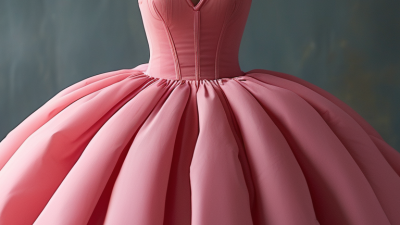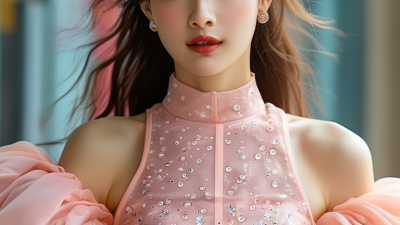
Sourcing a Balloon Skirt from China requires more than comparing photographs and quoted prices. Fabric structure, seam control, pattern accuracy, and shipping reliability can determine whether a sample becomes a successful retail product. This introduction presents ten Chinese manufacturers considered relevant for global buyers seeking dependable skirt production.
The selection focuses on practical buying factors. These include manufacturing experience, customization capability, minimum order quantities, sampling procedures, quality inspection, and export communication. Attention also goes to fabric weight, elastic recovery, lining, pocket construction, waistband comfort, and the rounded silhouette that defines a Balloon Skirt. Small details matter.
They often decide repeat orders.
Information should be checked directly with each supplier. Factory photos may look impressive, yet production capacity can differ during peak seasons. A low quotation may exclude packaging, testing, revisions, or transport costs. Buyers should request current samples, verify business credentials, confirm material specifications, and establish written quality standards before placing orders. Careful buyers also review labeling, chemical safety, worker welfare, and destination-market requirements.
No ranking is permanently objective. Supplier strengths change with equipment, staffing, fabric access, and order volume. Some manufacturers may excel at small-batch development, while others perform better with large, standardized runs. The following overview is therefore a practical starting point, not a substitute for due diligence. It aims to help fashion brands, wholesalers, and private-label retailers compare options with clearer expectations and fewer costly surprises.
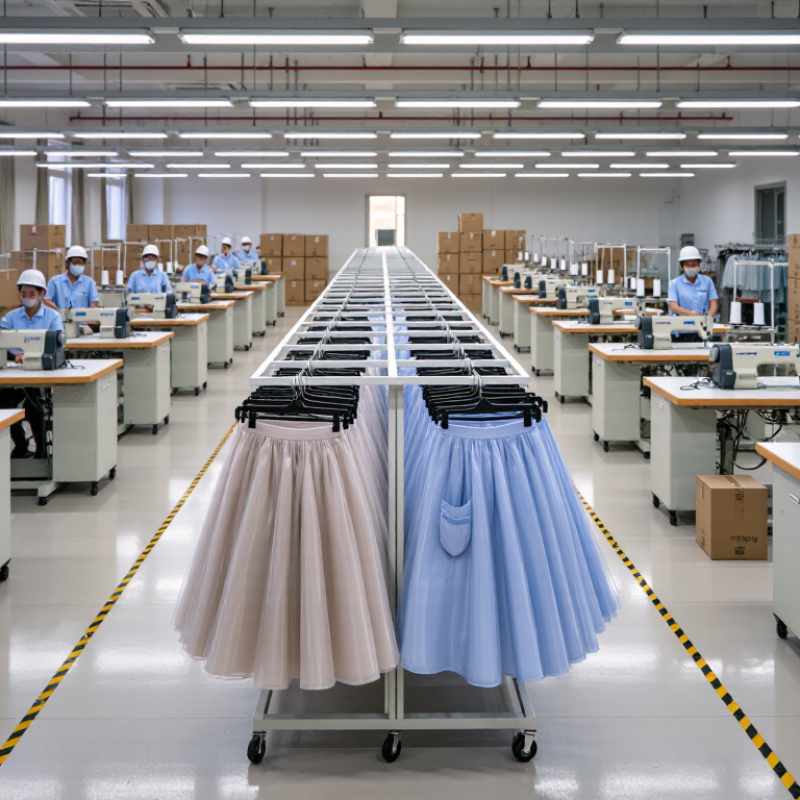
China Top 10 Balloon Skirt Manufacturers for Global Buyers
What Defines a Balloon Skirt Manufacturer in China
A capable balloon skirt manufacturer understands shape, not only sewing. The rounded silhouette depends on accurate pattern cutting, controlled fullness, and stable fabric recovery. Experienced teams test the waist, hem, lining, and side seams before bulk production. A small change in gathering can alter the entire look. Fabric choice matters too. Cotton blends create structure, while lightweight nylon gives a softer, inflated effect.
Reliable manufacturers should provide clear samples, measurable specifications, and consistent production records. Buyers should review stitching density, seam strength, shrinkage results, and colorfastness reports. Factory communication also reveals expertise. Can the team explain construction risks in simple terms? Can it adjust a pattern without hiding problems? These details support trust. No supplier is flawless. Delays, uneven measurements, or sample revisions can happen, so honest correction is more valuable than unrealistic promises.
Tips: Request a pre-production sample with exact measurements. Check the skirt after washing, sitting, and gentle movement. Ask for fabric composition, inspection procedures, production capacity, and compliance documents. A useful supplier should explain tolerances clearly. It should also identify weak points before shipment, even when that admission feels inconvenient. A low price may look attractive, but poor volume control can create bulky seams, uneven hems, and costly rework.
For global buyers, a capable balloon skirt manufacturer is typically evaluated by product construction, fabric sourcing, OEM/ODM development, quality control, compliance support, and order flexibility. The chart presents a practical procurement weighting model rather than a ranking of individual companies.
China Top 10 Balloon Skirt Manufacturers for Global Buyers
The top ten were selected through a practical, evidence-based screening process. China remains the world’s largest textile and clothing exporter, according to the WTO World Trade Statistical Review 2023. However, export scale alone proves little. We reviewed factory experience, balloon-skirt samples, production capacity, minimum order quantities, and overseas shipping records. Each sample was checked for seam strength, elastic recovery, lining opacity, and shape retention after washing. Small details matter.
Supplier reliability also required documented quality systems and traceable production records. The Fashion Transparency Index 2023 reported an average transparency score of only 18% among major fashion companies. That gap influenced our method. Manufacturers received stronger consideration when they could provide material sources, inspection procedures, audit evidence, and corrective-action records. We also compared sample consistency across repeated orders, not just one attractive prototype. No ranking method is flawless. Factory data can change quickly, and some smaller workshops communicate poorly despite solid workmanship.
Tips: Request three identical samples from different production batches. Measure the waist, hem volume, and skirt length before and after washing. Ask for written tolerances. A supplier that avoids specific answers may create expensive delays. Check whether inspection photos show the actual sewing floor, not only a polished showroom.
China Top 10 Balloon Skirt Manufacturers for Global Buyers
The ten profiles in this guide examine China’s leading balloon skirt manufacturers through practical buying criteria. Each profile considers design development, fabric sourcing, stitching control, and export readiness. Balloon skirts need stable volume, clean gathers, and reliable elastic recovery. A factory may look impressive online, yet sample quality reveals more.
Several manufacturers focus on custom production for boutiques, uniform suppliers, and fashion wholesalers. Their strengths vary. Some handle lightweight cotton and linen well. Others manage polyester blends, structured lining, or small-batch sampling. We also review communication speed, measurement accuracy, packaging, and production transparency. These details often affect costs more than the quoted unit price. My assessment is not perfect; factory capacity can change with seasonal orders and staffing.
Tips: Request a pre-production sample, measurement chart, fabric composition, and stitching photos. Check pocket placement and waistband tension after washing. Ask how defects are recorded and corrected. A low minimum order can help testing, but it may increase the unit cost. Confirm lead times in writing. Do not rely on photos alone. Physical inspection remains useful, especially for puffiness, seam balance, and color consistency. This guide supports careful comparison, not automatic selection.
China Top 10 Balloon Skirt Manufacturers for Global Buyers
For a global shortlist of ten Chinese manufacturers, design capability should come before catalog size. Balloon skirts need controlled volume, clean gathering, and balanced movement. Buyers should request pattern samples, waistband tests, and photos on different body types. Cotton poplin gives crisp structure, while recycled polyester creates lighter, smoother shapes. Textile Exchange’s Materials Market Report 2024 states that global fiber production reached about 124 million tonnes in 2023. Material selection now affects both appearance and procurement risk.
Quality depends on repeatability. Check seam density, lining attachment, zipper strength, colorfastness, and shrinkage after washing. Ask for measurement records from at least three production batches. Small flaws show quickly around curved hems. They matter. The World Bank’s Logistics Performance Index 2023 highlights delivery reliability as a major factor in international sourcing. A factory with strong inspection records may outperform a cheaper supplier with impressive samples.
MOQ and capacity require careful comparison. Some workshops accept 100–300 pieces per color, while larger facilities may request 500–1,000 pieces. Capacity claims should be verified through monthly output, sewing-line numbers, and peak-season schedules. McKinsey’s State of Fashion 2025 describes a low-growth market, making flexible replenishment increasingly valuable. Still, low MOQ can mean higher unit costs and weaker fabric purchasing power. That trade-off is easy to overlook. A practical evaluation should compare sample accuracy, defect rates, lead time, MOQ, and scalable capacity—not price alone.
Comparative overview of anonymized supplier profiles for international sourcing and private-label purchasing
| Rank | Supplier Profile | Main Production Region | Design Capability | Typical Fabrics | Quality Controls | MOQ | Monthly Capacity | Sample Lead Time | Bulk Lead Time | Best Suited For |
|---|---|---|---|---|---|---|---|---|---|---|
| 1 | Supplier Profile 01 | Guangdong | Advanced OEM/ODM; layered volume control, pleats, ruffles, and custom silhouettes | Polyester taffeta, nylon, cotton blends, recycled polyester | Inline inspection, measurement checks, needle detection, final AQL inspection | 100–300 pcs/style | 80,000–120,000 pcs/month | 7–12 days | 25–40 days | Fashion brands and seasonal collections |
| 2 | Supplier Profile 02 | Zhejiang | Strong pattern development; suitable for structured and high-volume balloon skirts | Polyester satin, chiffon, organza, stretch woven fabrics | Fabric inspection, pre-production sample approval, seam-strength checks | 200–500 pcs/style | 60,000–100,000 pcs/month | 8–14 days | 30–45 days | Mid-market retailers and private-label programs |
| 3 | Supplier Profile 03 | Jiangsu | Clean minimalist designs with reliable grading across standard size ranges | Cotton poplin, twill, rayon blends, recycled synthetics | Four-point fabric inspection, size-set review, carton inspection | 300–600 pcs/style | 50,000–85,000 pcs/month | 10–15 days | 30–50 days | Everyday fashion and repeat-order collections |
| 4 | Supplier Profile 04 | Fujian | Casual and resort-focused styling with elastic waists and adjustable details | Linen blends, cotton voile, polyester crepe, jersey | Colorfastness review, wash testing, seam and elastic inspection | 200–500 pcs/style | 40,000–75,000 pcs/month | 8–14 days | 28–45 days | Resortwear, holiday drops, and online boutiques |
| 5 | Supplier Profile 05 | Shandong | Cost-efficient basic designs with moderate customization and stable repeat production | Polyester woven, cotton-polyester blends, lightweight twill | Incoming fabric checks, sewing-line inspection, packing audits | 500–1,000 pcs/style | 70,000–130,000 pcs/month | 10–16 days | 35–55 days | Large-volume wholesale orders |
| 6 | Supplier Profile 06 | Guangxi | Small-batch development with emphasis on asymmetric hems, gathers, and decorative volume | Tencel blends, viscose, polyester chiffon, soft satin | Prototype approval, dimensional stability testing, final visual inspection | 100–300 pcs/style | 25,000–50,000 pcs/month | 10–18 days | 35–50 days | Independent designers and capsule collections |
| 7 | Supplier Profile 07 | Anhui | Uniform and modest-fashion adaptations with practical fit and durable construction | Poly-cotton, brushed twill, crepe, wrinkle-resistant woven fabrics | Size-set checks, color-shade control, seam and zipper testing | 300–800 pcs/style | 35,000–65,000 pcs/month | 10–15 days | 32–50 days | Workwear, schoolwear, and modest apparel programs |
| 8 | Supplier Profile 08 | Hunan | Trend-responsive designs with prints, contrast panels, and seasonal color development | Printed polyester, rayon, satin, lightweight denim | Print-color approval, fabric shrinkage checks, production sampling | 200–500 pcs/style | 30,000–60,000 pcs/month | 12–18 days | 35–55 days | Trend-led e-commerce and limited releases |
| 9 | Supplier Profile 09 | Hebei | Basic balloon construction with dependable sizing and competitive production pricing | Polyester pongee, cotton blends, standard woven synthetics | Basic fabric inspection, sewing inspection, quantity verification | 500–1,000 pcs/style | 45,000–90,000 pcs/month | 12–18 days | 35–60 days | Budget-conscious distributors and wholesalers |
| 10 | Supplier Profile 10 | Jiangxi | Flexible development for children's, junior, and casual balloon skirt collections | Cotton jersey, poplin, polyester blends, soft twill | Fabric composition review, wash testing, child-safety and trim checks | 200–500 pcs/style | 25,000–55,000 pcs/month | 10–16 days | 30–50 days | Children's apparel and family-oriented collections |
China’s top ten balloon skirt manufacturers may look similar online, but their production strengths can differ sharply. Global buyers should compare factory evidence, not polished photos. Ask for recent samples, fabric specifications, size charts, and production capacity. An experienced supplier should explain how layered tulle, elastic waistbands, and curved hems are controlled. Request a video inspection or independent factory audit when the order value is significant. Pictures are not proof.
Before ordering, send a clear technical pack with measurements, color references, stitching expectations, labels, packaging, and acceptable tolerances. Confirm whether the quoted price includes sampling, revisions, export packaging, and delivery to your destination. Use a written purchase agreement covering quantities, lead times, inspection standards, payment stages, and remedies for defects. Order a small pre-production sample first. Check waistband recovery after stretching, skirt volume, seam strength, color consistency, and loose threads. Keep dated approval records.
Reliable communication matters as much as low pricing. Measure reply speed, technical accuracy, and willingness to disclose limitations. Ask how suppliers handle fabric shortages, delayed trims, and failed inspections. Do not accept vague promises such as “best quality” without measurable criteria. Independent quality checks can reduce surprises, especially for first-time buyers. Still, no process removes every risk. Build a realistic buffer into launch dates and cash flow. That small compromise may protect the entire order.